Steven Broschart
DE·EN
Contact
Analyses
All Artificial Intelligence Forensics Digital Strategy Society Media Essay
What Can't Run Can't Be Hacked

What Can't Run Can't Be Hacked

May 26, 2026

On the quiet return of static websites – and why the most important security decision for a company website isn't which plugin to choose, but which architecture.

Read more →
The One-Man Unicorn – and its conceptual half-life
AI Entrepreneur

The One-Man Unicorn – and its conceptual half-life

May 25, 2026

When a single person can act like a large company thanks to AI, what distinguishes a company anymore? And why does exactly what makes this new class of solo founders possible also make them so vulnerable?

Read more →
The Wrong Question: Which Tasks Are AI-Suitable?
AI in Companies

The Wrong Question: Which Tasks Are AI-Suitable?

May 24, 2026

Companies planning an AI project typically start by asking what can be automated. That is the wrong question. The right one is: What happens when the machine gets it wrong?

Read more →
What Companies Actually Use AI For – Five Application Fields and Their Own Rules
AI in the Enterprise

What Companies Actually Use AI For – Five Application Fields and Their Own Rules

May 23, 2026

The discussion about AI in enterprises usually revolves around automation. In fact, that's only part of what's possible – and not necessarily the most valuable part. An overview of five application fields that operate according to different logics and must be handled differently.

Read more →
The Silent Externalization of Thinking
What else are we supposed to think?

The Silent Externalization of Thinking

May 22, 2026

With the invention of the printing press, people externalized knowledge. Nearly 600 years later, they are now also externalizing thinking itself. What does this mean for learning, understanding - and for us?

Read more →
Brands in the Age of AI
GEO & Content Strategy

Brands in the Age of AI

May 20, 2026

Why websites have a new task - and what matters for digital visibility now.

Read more →
What happens when you let LLMs play guessing games about professions?
What am I?

What happens when you let LLMs play guessing games about professions?

May 19, 2026

Our multi-agent experiment shows how differently language models think as a team.

Read more →
When Children Are Alone with AI
How dangerous is this?

When Children Are Alone with AI

May 14, 2026

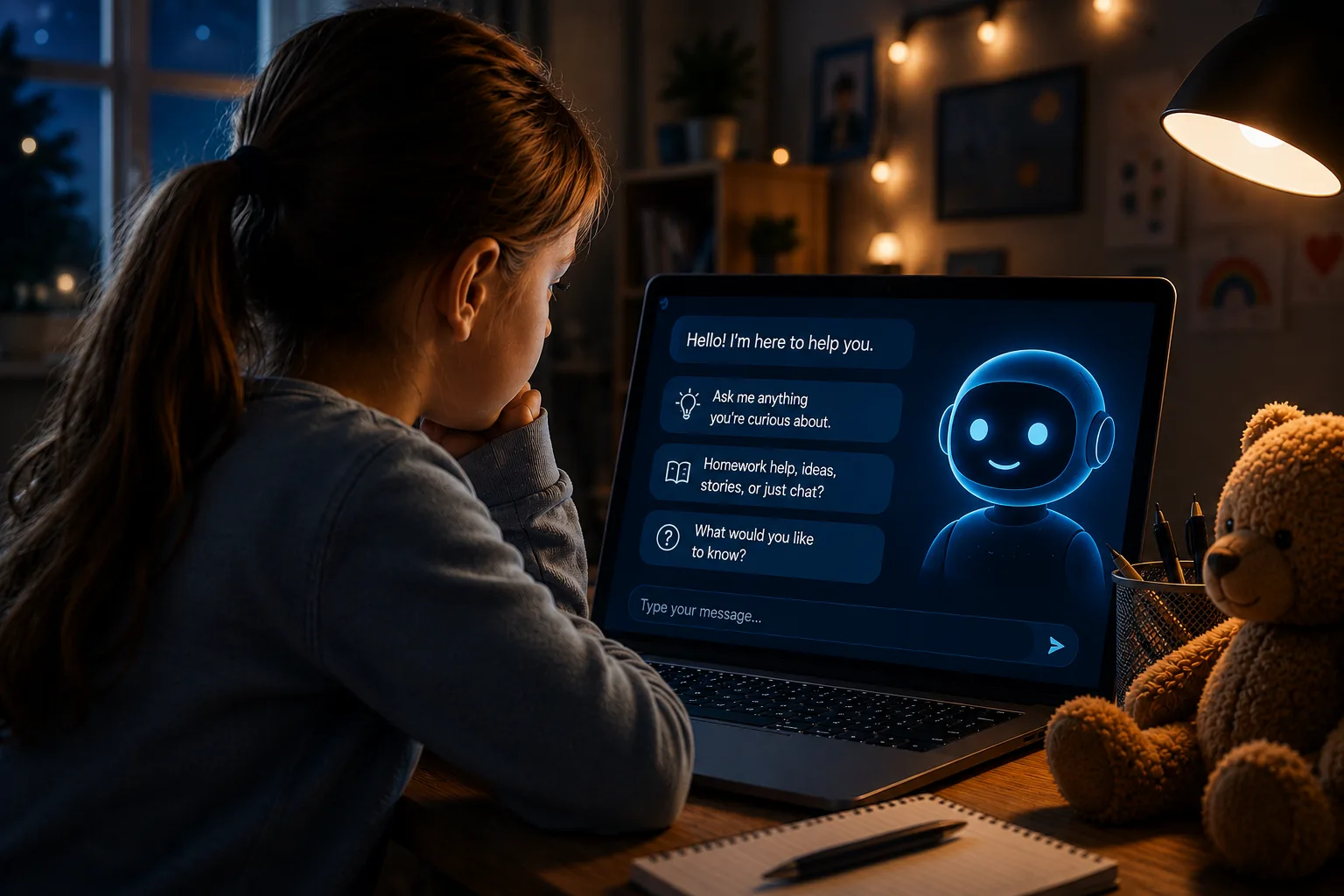
More and more children are talking to AI systems. Not just for homework. But also at night, secretly, emotionally — often without parents knowing how intense these conversations have already become. At the same time, reports of problematic or highly emotional interactions between users and AI systems are increasing. In some internationally discussed cases, chatbots have even played a role in the context of psychological crises and suicides. But how safe are modern language models really when they believe they are talking to a child?

Read more →
Beyond the Boundaries of Our Imagination
Making AI Visible

Beyond the Boundaries of Our Imagination

May 13, 2026

Hardly a day passes without artificial intelligence shifting another boundary that long seemed deeply human. And yet, only few people understand the fundamental concepts driving this revolution.

Read more →
Halite - Static-HTML CMS
Fast, secury, robust

Halite - Static-HTML CMS

May 11, 2026

Many small and medium-sized businesses today use classic content management systems like WordPress, TYPO3, Drupal, or Joomla - often grown over years, with increasingly more plugins, extensions, and technical debt. What was originally meant to seem flexible often becomes unwieldy, maintenance-intensive, and unnecessarily complex in practice. Halite was born out of precisely this experience.

Read more →

Multi-Agent Study on Simulation, Authenticity, and Blind Spots in Artificial Intelligence
The Psychopath in the LLM

Multi-Agent Study on Simulation, Authenticity, and Blind Spots in Artificial Intelligence

May 6, 2026

Large language models sometimes appear irritatingly close to certain characteristics described in clinical psychopathy research. They display affect without possessing feelings themselves. They simulate empathy because their training optimized them for it. They respond socially appropriately, understandingly, or charmingly – not from inner experience, but functionally.

Read more →